
Context
In November 2018, in New York, a simple hammer strike was enough to shake the contemporary art market: Portrait of an Artist by David Hockney soared to $90.3 million. Almost double the previous record for a living artist.
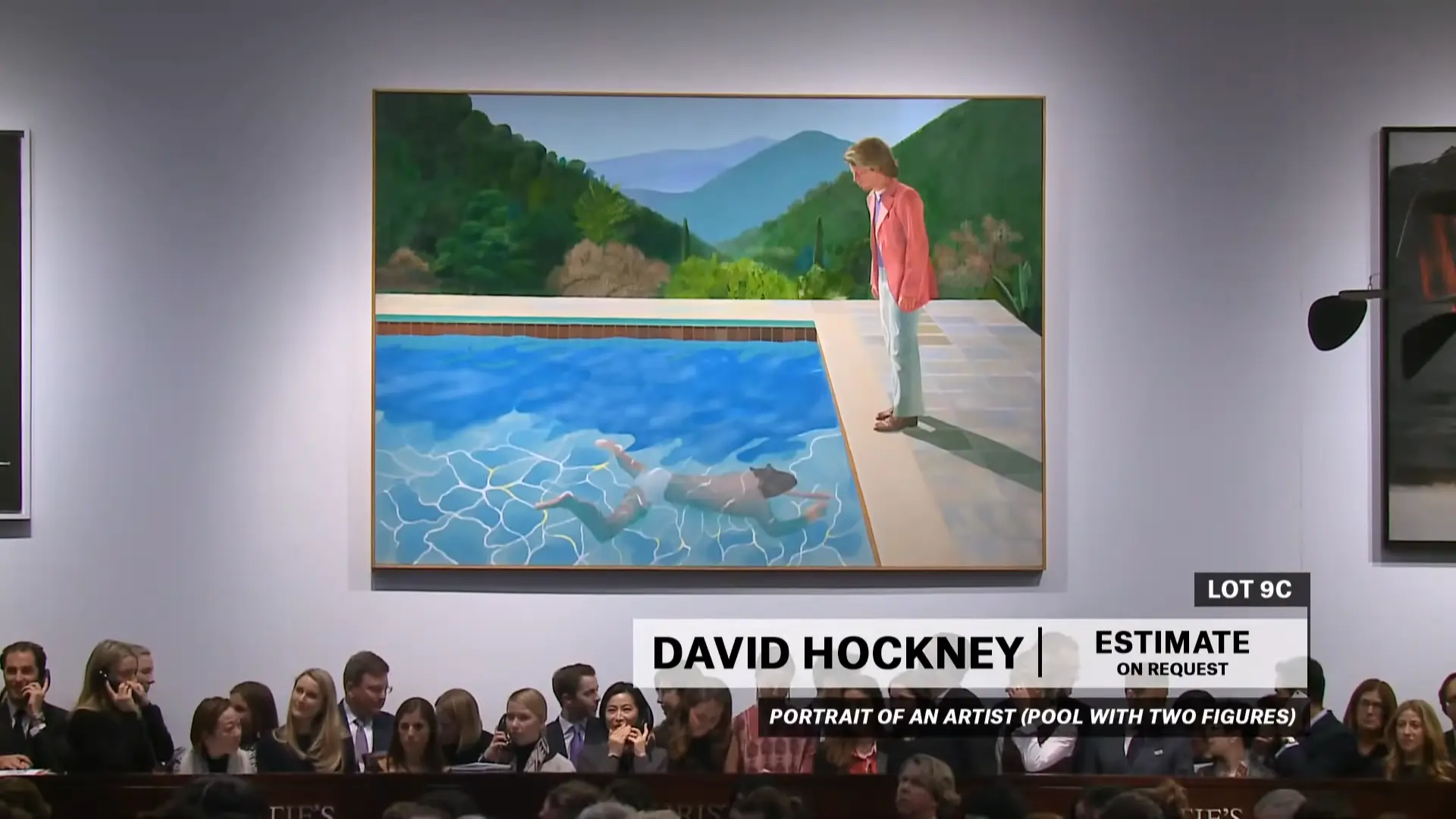
Behind this spectacular scene lies an increasingly complex ecosystem of stakeholders. Auctions are gradually becoming theaters where auction houses, collectors, financiers, and now third-party investors, invisible yet decisive, intersect.
Credits and reserve price
Starting in the 1990s, auction houses began to complicate their otherwise simple concept of selling to the highest bidder. To stimulate demand, they first marketed credit to bidders. By offering financing options, they allowed bidders to bid beyond their immediate means. The result: prices soared and sales accelerated, much to the delight of sellers.
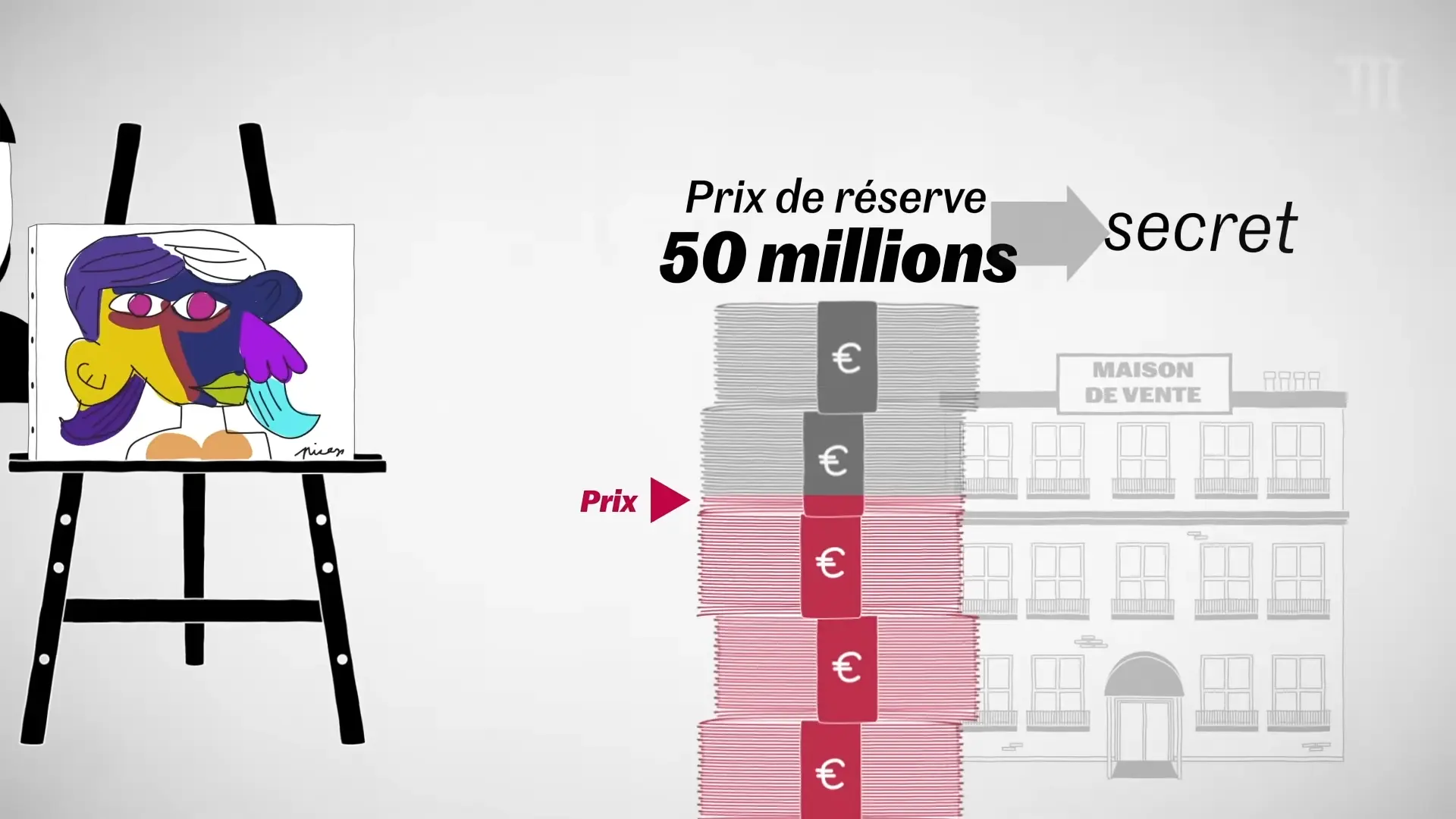
To continue to stand out, some auction houses have started to offer reserve prices, a minimum price set between the seller and the auction house. If this amount is not reached, the item remains unsold. This figure remains unknown to the bidders. This can frustrate those who thought they had won a piece only to learn that they did not meet the threshold. For the seller, however, this discretion provides the security of never having to sell their item at a loss.
Guaranteed minimum bids
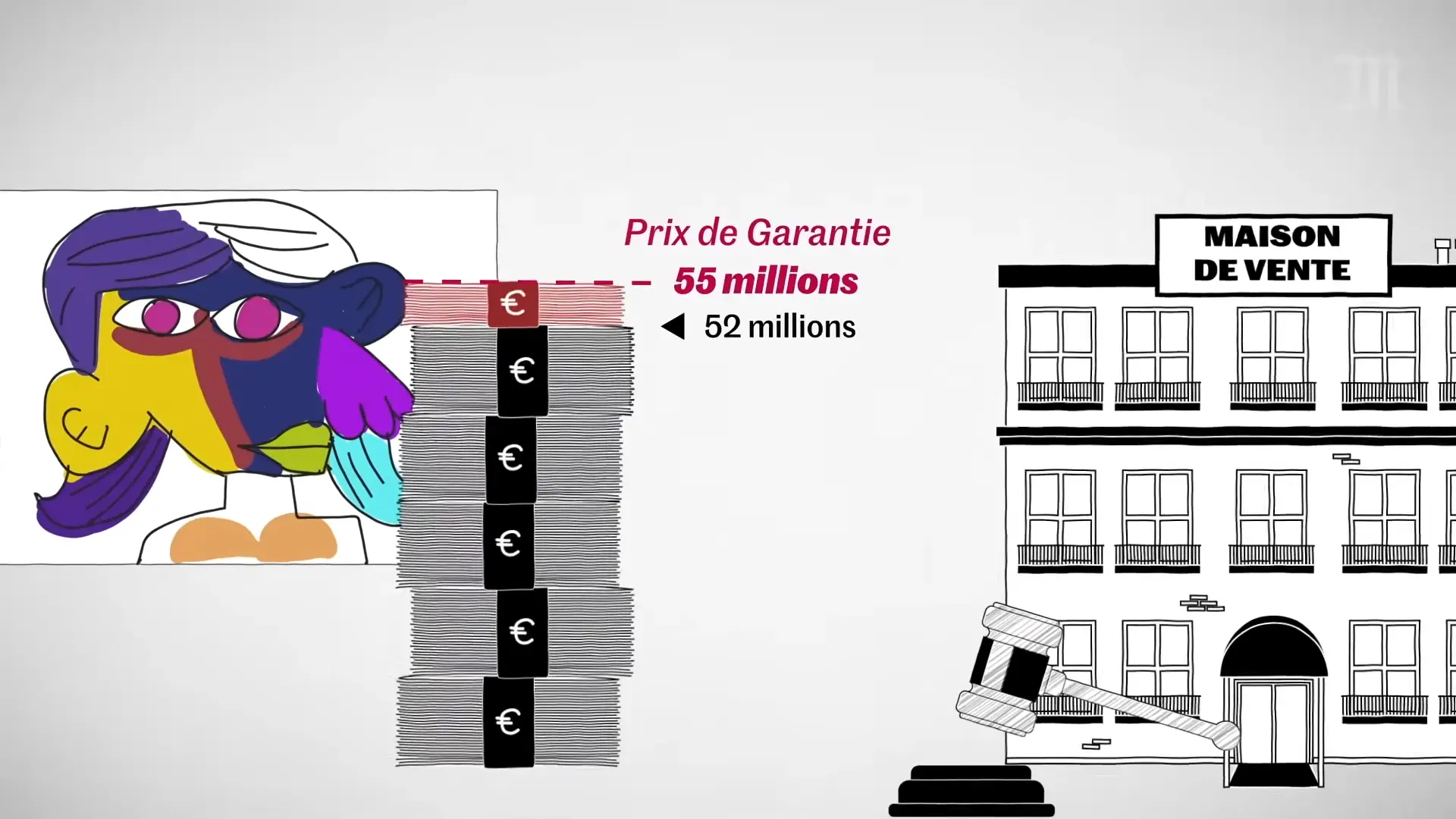
To attract the most prestigious works, auction houses have continued to innovate by offering, in particular, the guarantee to purchase the item at a price agreed upon in advance with the seller, if that price is not reached. This mechanism ensures the seller a minimum price even before the sale takes place.
If, for example, a painting is put up for sale with a reserve of 50 million dollars, the auction house can guarantee 55 million to the seller. Whether the artwork finds a buyer or not, the seller walks away with their 55 million. If the sale stops at 52 million, it is the auction house that covers the difference.
The guarantee system developed until the financial crisis of 2008. It disappeared after several auction houses found themselves forced to honor overvalued guarantees for works they could no longer resell.
The birth of third-party guarantors
It was not until 2015 that the system was relaunched in a new form. From now on, Christie’s and Sotheby’s or Phillips offer private investors the option to take the guarantee on their account. The concept has been institutionalized under two names: irrevocable bid at Sotheby’s and third-party guarantee at Christie’s.
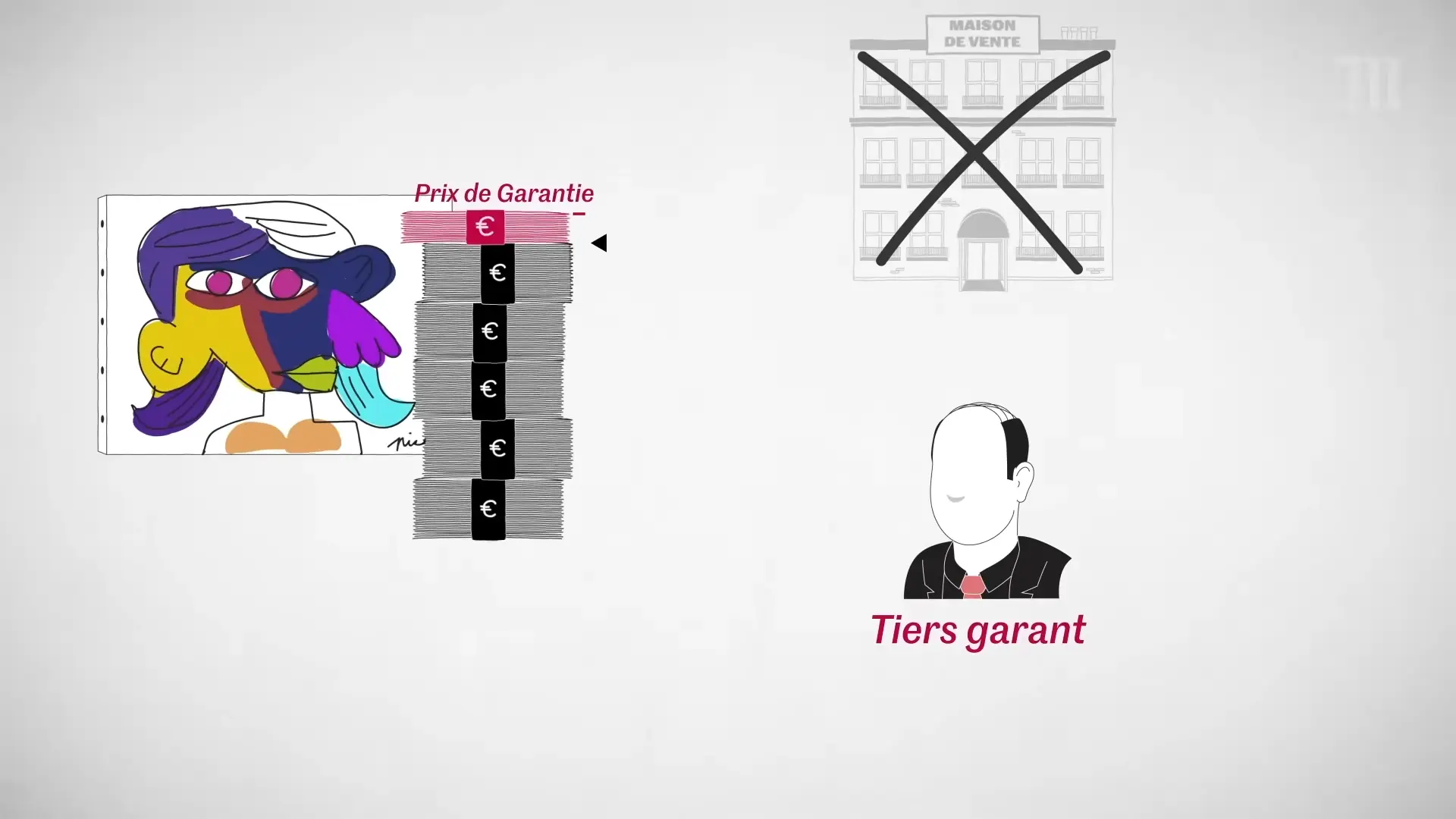
To encourage them to take the risk on their behalf, auction houses offer them considerable advantages: they can bid on the artwork during the sale, while they are the only bidders who know the amount of the reserve price and the guarantee they cover. If they win the sale, they are also exempt from purchase fees (often 20 to 25% of the final price). Conversely, if another bidder exceeds the guaranteed price, they share the profit with the seller and the auction house.
Become a guarantor starting from €250
Traditionally reserved for a handful of collectors and auction houses, the role of a third-party guarantor is becoming accessible. Konvi has brought this mechanism, usually worth several million dollars, into the reach of its users. In simple terms, we can now play a "fractional" guarantor role, starting from €250, to participate in auctions of prestigious items.
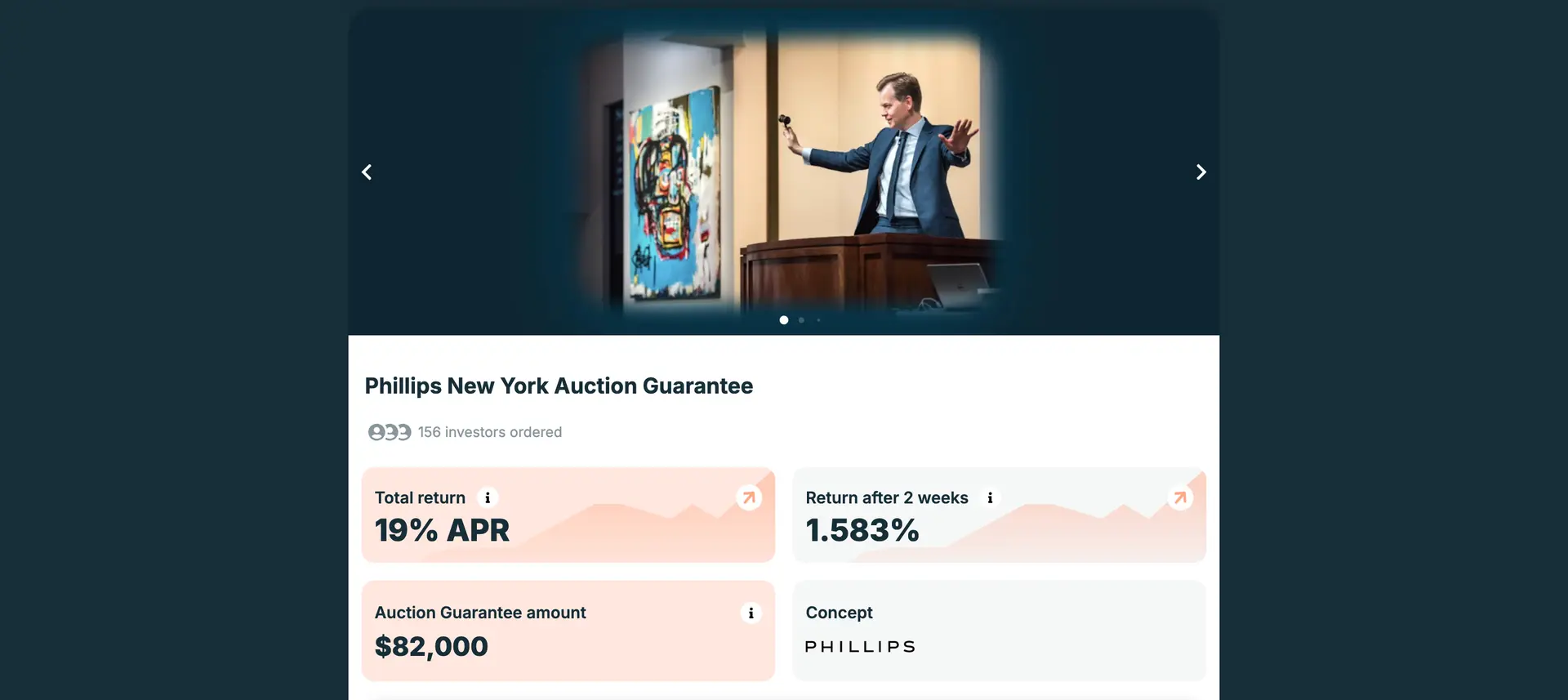
Specifically, here's how it works:
- Konvi identifies an interesting asset (artwork, collectible watch, classic car...) put up for auction.
- A "guarantee price" is set between Konvi and the auction house. The investors on the platform who wish to act as guarantors collectively commit to covering this amount.
- Two scenarios arise:
- If the final bid exceeds this guaranteed price, you will receive a share of the additional margin proportionally to what you contributed.
- If the bid remains below, you become a co-owner of the asset at the guaranteed price. The asset enters your Konvi portfolio and you can expect future appreciation.
The first operation of this kind conducted by Konvi allowed 156 investors to become guarantors of a minimum sale price of $82,000. The sale ultimately exceeded this guarantee, generating a return of 1.583% in just two weeks, or +19% annualized.

What are the risks?
The main risk for the guarantor in this type of operation is obviously that the asset is sold for less than the guaranteed price. In this case, the guarantors must purchase the work. This results in an unsold asset that is difficult to resell quickly. This type of work often loses its appeal in the market because collectors know it did not find a buyer the first time. Therefore, it may take several months, or even years, before it can be offered at auction again under favorable conditions.
A system deemed unequal
The system is divisive. Some see it as a betrayal of the very principle of auctions, which are supposed to be fair and transparent. The third-party guarantors have a clear advantage because they know the reserve prices and often benefit from fee exemptions. These imbalances create a two-tier market: one for the general public and one for professionals. For some, it is a drift; for others, it is the natural evolution of a market that has become a true financial product.